
8 Ball Rules
Before reading these, you should consult the General Rules of Pocket Billiards. Except when clearly contradicted by these additional rules, the General Rules of Pocket Billiards apply when playing 8 Ball.
8 Ball Rules - How to Play 8 Ball
This page contains references to some material that is copyrighted by the Billiard Congress of America. Any modification or sale of such information herein is strictly prohibited by the laws governing that copyright. Please direct questions regarding interpretation of the following, or information on how to receive the current BCA "Billiards - The Official Rules and Records book" to the Billiard Congress of America.
If there are any terms throughout the 8 ball Billiards rules that you do not understand, you can search our billiard terms glossary in the search box near the top left of the page, or search the billiard terms glossary directly. I have also included the Billiard Congress of America's reference numbers, so that readers can reference each rule back to the specific rule text on the Billiard Congress of America website.
Object of 8 Ball Pool
8 Ball is played with a cue ball, an 8-ball, and fifteen object balls, numbered 1 through 15. Balls 1-7 are solid colors, and balls 9-15 are striped. One player must pocket balls of solid colors, while the other player the striped ones. The player pocketing their entire group first and then legally pocketing the 8-ball wins the game.
Equipment for 8 Ball
In 8 Ball, eight solid-colored billiard balls numbered 1 through 8, and seven striped billiard balls numbered 9 through 15 are used, along with one solid white cue ball. The solid balls are often known as "Low" balls (1-9) and the striped balls are often known as "high" balls. (1-9)
The balls are normally colored as follows:
- 1 and 9 - yellow
- 2 and 10 - blue
- 3 and 11 - red
- 4 and 12 - purple
- 5 and 13 - orange
- 6 and 14 - green
- 7 and 15 - brown
- 8 - black
- cue ball - white.
You may also observe that the 7 and 15 balls are sometimes colored tan or magenta.
Playing 8 Ball
There are four general phases to the billiard game of 8 Ball. These include setup, breaking, taking turns, and pocketing the 8 ball.
Setup
To begin the game of 8 ball, the colored balls are placed in a triangle, called a "rack". The base of the rack is parallel to the short end of the pool table and is positioned so the ball in the tip of the rack is located on the foot spot. The balls in the rack are pressed into contact with the foot ball, and remain in contact after the rack is removed. Within the rack, the 8-ball is centered while the two corners are each spotted with one solid ball and one stripe ball. The game begins with the cue ball in hand anywhere behind the head string. (That is, the quarter of the billiard table farthest from the rack), an area also known in slang terms as the "kitchen".
The pool table is divided into two equal halves lengthwise by an imaginary line named the "long string". Two lines, the "head string" and "foot string" run perpendicular to the long string and are placed 1/4 length away from each end of the table. The intersection of the long and head strings is called the "head spot", and the intersection of the long and foot strings is called the "foot spot".
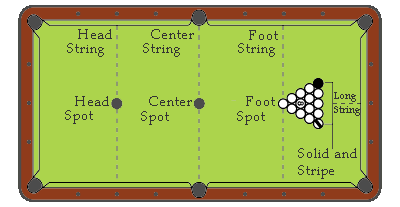
Break
One player is chosen to shoot first ("break" the balls apart; note that this definition of the word "break" is different than it may be in other billiard games, notably snooker) by any number of methods. These include, but are not limited to: the flip of a coin, loser of last game breaks, winner of last game breaks, "lag", etc. Lag is a contest for determining who will break, and is the preferred method as specified by the Billiard Congress of America. In the Lag, each player shoots a solid ball (other than the cue ball) from behind the head string to the foot of the table. The player whose ball returns closest to the head rail wins the lag and has the option to break. The winner of the lag may elect to pass the break to his or her opponent. The winner of each game breaks in the next. The following are common options that may be designated by tournament officials, or decided upon by each player, in advance: Players alternate break, Loser breaks, and Player trailing in game count breaks the next game. For casual play, or as a part of various house rules, there are several variations of ways to determine which player shoots first. These include alternating players each game, winner breaks, and winner chooses who is to break.
Legal Break Shot
For the break shot to be legal, the breaker, with the cue ball behind the head string, must either pocket a ball, or drive at least four numbered balls to the rail. When the breaker fails to make a legal break, it is a foul. When a foul occurs, the incoming player has the option of accepting the table in position and shooting, or having the balls re-racked and exercising the option of shooting the opening break or allowing the offending player to re-break. If the breaker pockets a ball, it is still the same player's inning. This area of 8 Ball has two possible variations.
- The breaker is deemed to have legally pocketed a ball, and continues to shoot for balls in the same group. In this interpretation, if balls in both
groups are potted, a common rule is for the player to nominate which group they will shoot for, but for their inning to end.
- If no numbered ball is pocketed by the opening break, then the table remains "open" and the opposing player's inning begins. The table is "open" when the choice of groups (stripes or solids) has not yet been determined. When the table is open, it is legal to hit a solid first to make a stripe or vice-versa. Note: The table is always open immediately after the break shot. When the table is open, it is legal to hit any solid or stripe first in the process of pocketing the called stripe or solid. However, when the table is open and the 8-ball is the first ball contacted, it is a foul and no stripe or solid may be scored in favor of the shooter. The shooter loses his turn; the incoming player is awarded cue ball in hand; any balls pocketed remain pocketed; and the incoming player addresses the balls with the table still open. On an open table, all illegally pocketed balls remain pocketed.
Scratch on a Legal Break
If a player scratches on a legal break shot, all balls pocketed remain pocketed (exception, the 8-ball: see "8-Ball Pocketed on the Break" below), it is a foul or, the table is open. Note here that the incoming player has cue ball in hand behind the head string and may not shoot an object ball that is behind the head string, unless he first shoots the cue ball past the head string and causes the cue ball to come back behind the head string and hit the object ball.
Object Balls Jumped off the Table During the Break
If a player jumps an object ball off the table on the break shot, it is considered a foul and the incoming player has the option of accepting the table in position and shooting, or taking cue ball in hand behind the head string and shooting.
8-Ball Pocketed on the Break
If the 8-ball is pocketed on the break, breaker may ask for a re-rack or have the 8-ball spotted and continue shooting. If the breaker scratches while pocketing the 8-ball on the break, the incoming player has the option of a re-rack or of having the 8-ball spotted and begins shooting with ball in hand behind the head string.
Choice of Group
The choice of stripes or solids is not determined on the break even if balls are made from only one or both groups, because the table is always open immediately after the break shot. The choice of group is determined only when a player legally pockets a called object ball after the break shot. If the groups have been determined and the player mistakenly shoots at and pockets a ball of the group, the opponent must call a foul on that player before they take their next shot. If the opponent fails to do so, the player automatically takes over the group of balls (solids or stripes) at which he or she has been shooting during this inning.
Taking Turns (Innings)
A player will continue to shoot until he/she makes a fault or fails to pocket one of the object balls. At this point, the player's inning is over, and then, the other player takes his/her turn. Play alternates like this for the remainder of the game.
Call Shot
In Call Shot, players need not call obvious balls and pockets, however, it is the opponent's right to ask which ball and pocket are to be used in the shot if they are unsure of the shot. Bank shots and combination shots are not considered obvious, and appropriate care should be taken in calling both the object ball and the intended pocket. When calling the anticipated shot, it is not necessary to indicate details such as the number of cushions, banks, kisses, caroms, etc that will be used in the shot. Any balls pocketed as the result of a foul are to remain pocketed, regardless of whether they belong to the shooter or the opponent. The opening break is not considered a called shot. Any player performing a break shot in 8-Ball may continue to shoot so long as any object ball is legally pocketed on the break.
Pocketing the 8 ball
Once all the player's object balls are pocketed, he/she can now attempt to sink the 8 ball and win. To win, he/she must specify the pocket it will land in, and make it in that pocket. If it is shot in to the wrong pocket, if the cue ball is potted, or if there is a fault (see below), he/she loses. If neither the cue ball nor the eight ball is potted, the player's inning is over.
Playing the 8 ball
When the 8-ball is the legal object ball, a scratch or foul is not loss of game if the 8-ball is not pocketed or jumped from the table. Incoming player has cue ball in hand. Note: A combination shot can never be used to legally pocket the 8-ball, except when the 8-ball is the first ball contacted in the shot sequence.
Legal Shot
On all shots (except on the break and when the table is open), the shooter must hit one of their group of balls first and either pocket a numbered ball, or cause the cue ball, or any numbered ball to contact a rail. Please Note: It is permissible for the shooter to bank the cue ball off a rail before contacting the object ball; however, after contact with the object ball, an object ball must be pocketed, or the cue ball or any numbered ball must contact a rail. Failure to meet these requirements results in a foul.
Safety Shot
For tactical reasons, a player may choose to pocket an obvious object ball and also discontinue a turn at the table by declaring safety in advance. A safety shot is defined as a legal shot. If the shooting player intends to play safe by pocketing an obvious object ball, then prior to the shot, the shooter must declare a safety to the opponent. It is the shooter's responsibility to make the opponent aware of the intended safety shot. If this is not done, and one of the shooter's object balls is pocketed, the shooter will be required to shoot again. Any ball pocketed on a safety shot remains pocketed.
8 Ball Scoring
A player is entitled to continue shooting until failing to legally pocket a ball of his group. After a player has legally pocketed their entire group of balls, they now shoot to pocket the 8-ball.
Combination Shots
Combination shots are allowed; however, the 8-ball can't be used as a first ball in the combination unless it is the shooter's only remaining legal object ball on the table. Otherwise, should such contact occur on the 8-ball, it is a foul.
8 Ball Faults
When one player commits a fault, the other player gets "ball in hand", that is, they may place the cue ball anywhere on the table before playing their next shot. This is one area of substantial disagreement in 8-ball rules: some (including those of the BCA) play that (after the break) the cue ball may be placed anywhere, and shoot at anything. Other rule sets suggest that the player with "ball in hand" may only place the cue ball in the "kitchen", and must shoot out of the "kitchen" before hitting any ball. This means that they may not shoot at a ball inside the "kitchen" directly. However, if all their balls are inside the "kitchen", they can request that the one closest to the head string be placed on the head spot. Under BCA rules, if the cue ball is pocketed on the break, the cue ball must be placed in the "kitchen" and shot out. If he/she sinks the cue ball while playing on the black, it will be an immediate foul and the opposite player will receive two shots whether or not he or she is on the black. If he or she sinks the black and the cue ball he or she will automatically lose the game.
Illegally Pocketed Balls
An object ball is considered to be illegally pocketed when that object ball is pocketed on the same shot that a foul is committed, or when the called ball did not go in the designated pocket, or when a safety is called prior to the shot. Illegally pocketed balls remain pocketed and are scored in favor of the shooter controlling that specific group of balls, solids or stripes.
Fouls on Jump Shots, and Masse Shots
Generally "cue ball fouls only" is the rule of play when a match is not presided over by a referee. However, a player should recognize that it will be considered a cue ball foul if during an attempt to jump, curve, or masse the cue ball over or around an impeding numbered ball that is not a legal object ball, the impeding ball moves position. This is regardless of whether it was moved by a hand, cue stick follow-through, or bridge.
Object Balls Leaving the Billiard Table
If any object ball is leaves the table, it is considered a foul and loss of turn, unless it is the 8-ball, which results in a loss of game. Any jumped object balls are not re-spotted.
APA rules:
- Whether, and how jumping the cue ball is a fault
- Whether you lose if you:
- Shoot at the eight ball and miss
- Shoot at the eight ball, pocket the cue ball, but don't pocket the eight ball
- Whether the players have to announce ball and pocket
- Whether pocketing the eight ball on the break is a win or a loss
Stalemated Game
If after three consecutive turns at the table by each player (six turns total), the referee judges that attempting to pocket or move an object ball will result in loss of game, the balls will be re-racked with the original breaker of the stalemated game breaking again. The stalemate rule may be applied regardless of the number of balls remaining on the table. Please Note: Three consecutive fouls by one player in 8-ball is not a loss of game.
Loss of Game
A player loses the game of 8 Ball by committing any of the following infractions:
- Fouls when pocketing the 8-ball (exception: see "8-Ball Pocketed On The Break" above).
- Pockets the 8-ball on the same stroke as the last of his group of balls.
- Jumps the 8-ball off the table at any time.
- Pockets the 8-ball in a pocket other than the one designated.
- Pockets the 8-ball when it is not the legal object ball.
All infractions must be called by the opposing player before another shot is taken. Otherwise it will be deemed that no infraction occurred.
Possible set of rules
The rules for this game may be the most debated and contested rules of any billiard game; thus, it is imperative that you and your opponent agree on the rules before playing. Many players and leagues in the USA use the Billiard Congress of America (BCA) rules as their standard. The billiard hall at which you are playing may also have their own house rules, though you should still consult your opponent on whether to play by them.
8 Ball Differences between the UK and the USA
- In the version of pool or 8 Ball played in the United Kingdom and Australia, plain unnumbered red balls and yellow balls often replace the solid and striped balls. If not, the terms "bigs" (9-15) and "smalls" (1-7) are used instead. The black ball, however, typically bears a number eight. Another difference is that the UK billiard table has pockets just larger than the balls, whereas the American billiard table has pockets that are significantly larger.
- The cue ball is often placed initially directly opposite the other balls, on the boundary line of the kitchen.
- Whether a ball contacts the rail, or the player pots one of his own balls, is irrelevant in deciding a foul. Instead, a legal move is one where the cue ball first hits one of the balls in the player's own group, and does not pot the cue ball, the black ball or any of the balls in the opponent's group. If the player does succeed in potting one of his own balls then he or she will often be rewarded with a free shot.
- After a foul stroke in the UK, the offending player will miss a turn known as the "two shots" rule. This generally replaces the "ball in hand" rule, except in the case that the cue ball is potted. In this case the opposing player, in addition to receiving a second shot, may choose where to place the cue ball. Sometimes the player is limited to the semicircle, "the D," although the horizontal boundary line of the "kitchen" can also be permitted. It should also be noted there has never been a one-shot on the black rule despite popular belief, the EPA rules can be found at http://www.epa.org.uk/wrules.php
- A common area of contention concerns "fouls on the black." Possibilities include:
- Any foul committed while shooting for the black ball is an instant loss.
- Any foul committed while both players are shooting for the black ball is an instant loss.
- Any foul committed while one's opponent shooting for the black ball only entitles him to one shot.
- Similarly, there is contention over two shots "carrying over". Possibilities include:
- If a player has two shots, and pots a ball with the first, he still has two shots.
- If a player has two shots, and pots a ball with the first, he now has one shot left.
- Rule 1 applies unless the potted ball is his last colored ball, in which case rule 2 applies.
- Lastly, the question of "shooting backwards" after the white ball is respotted following being potted. Possibilities here include:
- A player may not hit a ball on or behind the line without hitting another ball or cushion first.
- A player may not "shoot backwards", but may shoot at balls behind the line provided that the direction of motion of the white ball is forwards.
- A player may shoot backwards.
- Further disagreement may arise over whether it is acceptable to deliberately pot the white ball (usually if a "no shooting backwards" rule is in effect, and the opponents' balls are behind the line).
Standardized Rules (World 8 Ball rules)
A standardized version of pool rules for professional competitions have been established. These are the rules played in most 8-ball tournaments on television. These rules are often played in amateur leagues as well. World Rules creates differences to encourage quick play and promote skill by making playing a snooker (hook) more difficult and making covering pockets less advantageous.
Some examples of these differences would be:
On all shots, the player must cause the Cue Ball's initial contact with a ball to be with a ball "On" and then pot a ball "On" or cause the Cue Ball or any Object Ball to contact a cushion.This means that an easy snooker cannot always be played.Also:
In some versions of 8 ball purposefully committing a foul (by sinking an opponents ball) is not allowed. World 8 ball rules permits this. Furthermore, the cue ball cannot be moved after a foul is committed. This means that pocketing an opponents ball sometimes means that no significant advantage is given to the opposing player. This depends on where the cue ball lies after the shot is played. Care must be taken though as playing a foul shot resulting in a snooker results in a "foul snooker". The opposing player can then play a free ball from the baulk.
Blackball Rules
On January 1, 2006, "Blackball" rules were introduced world-wide. They are being introduced in the UK and other countries playing "small table, English pool". The idea is that blackball should unify the various existing rule-sets. Blackball takes the best parts of the all the main types of rules. These rules are sanctioned by the World Pool Association. A guide to these rules can be found at www.blackball.info. The governing body for blackball in Europe is the European Blackball Association.
8 Ball Rules
If you have any questions about 8 Ball Rules, please post them in the pool rules forum.
8 Ball Rules History
Eight Ball rules, or 8 Ball Rules informally, was created around 1900 with the earliest known recorded set of 8 ball rules originating around 1906. At this time, it was not named Eight Ball rules, but rather it was named "B.B.C. Co. Pool" which is a name that stuck and was used as late as 1925. Eight ball was originally played with seven yellow balls and seven red balls, and a black ball, which is a ball set that is still used in the British style UK 8 ball. Eight ball rules didn't vary as much as they do today. In fact, it was not until 1940 that 8 ball rules ever made it in to any official billiard rule book.
The official 8 Ball Rules are predominently observed in North America.
The official governing body for 8 Ball Rules is the World Pool-Billiard Association.
How to Play 8 Ball
Questions about 8 Ball Rules:
- Intentional Fouls on Coin Operated Pool Table
- Calling Shots and the Last Pocket Rule
- 1-15 Eightball Pocket 1 Ball and Another in Corner
- 1-15 8-Ball, Last Pocket Rule
- Coin-Op 8 Ball Rules for Opponent's Last Ball
- Written Rules for Coin Operated Pool Tables?
- Modified Pool Rules for Coin-Op Pool Tables?
- 3 Rail Final Shot in "Last Pocket 8 Ball"
- Accidentally Pocket the 8 Ball in "Last Pocket" 8 Ball
- Cue Ball Position for Break Shot in "Last Pocket" 8 Ball
- Last Pocket 8 Ball Rules When Last Pocket is Blocked
- Last Pocket 8 Ball Rules Opponent Pockets Your Last Ball
- Bar Room 8 Ball Pool Rules
- Sinking Eight Ball On Opening Break
- Calling Banks, Caroms, and Combos in 8 Ball
- American 8-Ball - Is a Double Kiss Legal if Not Called?
- How To Rack The Balls In Eight Ball
- What Happens if the Cue Ball Hits a Solid and Stripe at the Exact Same Time?
- Are Jump Shots Legal in 8 Ball Pool?
- Cue Ball Frozen to Opponent's Object Ball
- What Happens When the Cue Ball Doesn't Contact any Ball or Cushion?
- What Happens if you use Opponent's Ball as 1st Ball in a Combo Shot on the 8 Ball?
- What if you Pocket Your Ball and Your Opponent's Ball?
- What Happens when a Pocket is Full in 8 Ball?
- Do Opponent's Balls Pocketed While Scratching Get Re-Spotted?
- Can you Bank the Cue Ball off of a Rail and Into an Opponent's Ball?
- Sinking 8 Ball on Break
- Can You Pocket Your Last Ball Then the 8 Ball in the Same Shot?
- Sink 8 Ball Then Scratch Cue Ball
- Can the 8 Ball Be Used In Combo Shots?
- Hit Solid and Stripe at Same Time
- Is it an 8-Ball Foul if Opponent's Ball Falls after You Legally Pocket Yours?
- Is this Defensive Shot Legal in 8-Ball Bar Play?
- Hit Opponent's Ball First when Shooting at 8 Ball, Nothing Pocketed
- Using Opponent's Object Ball as 2nd Ball in Combination Shots
- Is it a Foul if the Cue Ball Sinks an Opponent's Ball After Legally Pocketing Your Own Ball
- Scratch on the Last Shot Before Final Shot on the 8 Ball
- Scratching on the First Ball Pocketed on an Open Table After Break Shot
- What if I Pocket My Opponent's Ball but None of My Own?
- Thailand 8 Ball Rules, Cambodian Crazy Rules
- Is Snookering Your Opponent Legal in 8 Ball Pool?
- Can You Shoot at the 8 Ball When You Still Have an Object Ball Remaining?
- Scotch Doubles 8 Ball Rules
- Simple 8-ball Tournament Rules
- What if a Player Hits a Solid or Striped Ball Directly with the Pool Cue?
- Can You Sink Your Final Ball and the 8 Ball in the Same Shot to Win?
- Penalty for Accidental Cue Ball Contact While Aiming
- Do You Lose the Game if the Cue Ball Knocks the 8 Ball in the Same Pocket as the Last Ball?
- Is it a Stalemate if Only the 8 Ball and Opponent's Last Ball Remain and Block Each Other at the Edge of a Pocket?
- What to Do when Shooting "Ball-in-Hand From the Kitchen" But Your Balls Are All in the Kitchen?
- Can you Shoot the 8-Ball off of an Opponents Ball and Into the Called Pocket?
- 8 Ball Break Rule Question
- 8 ball combo ruling
- Accidentally Moving a Ball
- 4 Important 8 Ball Rules Questions
- Pocketing 2nd Last Ball, and 8 Ball
- Shooting Cue Ball Against Cushion to Re-Position
- 8 ball combo
- Teetering Object Ball
- 3 Foul Rule in 9 Ball
- 8 Ball Rules Pocket Opponent's Ball First
- Pocketing your last ball then scratching
- Is it a foul to shoot your ball in as called
- Stupid Question from a Stupid Rookie
- Shot clock?
- Open table on the break
- 8 ball break question
- Local Variants of 8 Ball With Different Rules
- Easy or Fast 8 Ball
- Help on BCA rule 4.11
- Cue Ball Foul Under BCA Rules
- 8 ball, break rules?
- History of the "Ball In Hand Rule" in 8 Ball
- calling in 8-ball
- Rule question?
- Touching an Object Ball But No Movement
- Another 8 ball break Q
- Proper Way to do a Jump Shot and not Foul
- Black ball loss of game?
- Some 8 Ball Rules Questions
- Ambiguous "choice of group" rule
- APA All Ball Fouls Rule
- Ball in hand foul
- UK 8-ball Pool Rules
- who gets the 8 ball call on the last ball scratch?
- How Close on Call Shot 8-Ball
- Billiard Rules for Not Contacting a Cushion
- Playing 'down the table'
- Need Confimation Few Rules!
- loss of game
- Please Help With 8 Ball Ruling
- Pool Rules Preventing Defensive Shots in 8-Ball
- 8 ball team tournament ruling
- Aligning the Rack
- sink 8 ball on break and scratch
- SPORTSMANSHIP and the rules
- Help Settle a Family 8 Ball Disagreement
- Serious Question on Balls Pocketed
- Need Help on 8Ball Rules
- When cue ball spins on rail during play
- Eight Ball Break
- Legal shot?
- 8ball in pocket off of other players ball
- 8 Ball Rules and Shooting out of the Kitchen No Balls Left
- Iraq 8 Ball Rules and Ugandan 8 Ball Rules in Baghdad
- Scratching While Playing the 8 Ball
- Is it a Foul to Pocket Other Balls In Addition to Called Ball?
- 8-ball calling shots
- 8 Ball changed and I didn't
- Strange combo to sink the eight
- A huge debate of a gray area
- Judgement Call on 8-Ball
- Playing Defensive in 8 Ball Pool
- Ball In Hand Rules Clarification
- Pocketed the 8 Ball After Legally Sinking my Last Ball
- 8 Ball Format Played With Break-Box
- Can You Shoot at the 8 Ball When it is Not Your Last Ball?
- Ball in front of pocket
- Foul on a Combination Shot
- When Cue Ball Hits Opponents Ball First
- Professional Rack or BCS rack
- 8 Ball Rule for Touching the 8 Ball With the Cue
- Frozen cue ball to 8 ball
- Safety Shot And When to Call Your Shots
- 8 Ball Mistake, What is the Penalty?
- Is the 8 Ball Neutral?
- White flew out, black goes in
- Penalty For Jumping Object Ball Off The Table
- Penalty for Intentional Fouls
- Question on a rule
- Couple of questions regarding fouling on 8-ball
- Open Table After the Break Shot
- object ball
- Ball to Rail Foul
- Does One Hand Have to Touch the Pool Table During a Shot?
- Pool 8 ball Rule Help
- APA 8 Ball Tournament Rules Sudden Death & Forfeit
- Can You Shoot Before All Balls Have Stopped Moving?
- Has anyone ever heard of this rule in 8 ball
- Cue Ball Placement After a Scratch
- Rules when Pocketing Opponents Ball First
- Losing if you don't hit 8 ball in first try?
- 8-ball Called Shot Using Combo off Opponents Ball
- Pocketing of 8-Ball
- Calling "through the pack..." in 8 Ball Rules
- making opponent's ball AFTER first striking my own
- when shooting the 8 ball?
- sinking object ball and opponent's ball
- Touching the 8 Ball With the Cue
- Table still open?
- Hitting more than 1 ball into the poceket
- Rule 4.15 "Combination Shots" Need Expert Help
- sinking 8 ball when just a shot is called
- Good or Bad
- White Ball Pocketed After Sinking the 8 Ball
- cue ball is hit off the table
- 8 ball open shot after the break
- Combo off after break, table still open
- Defending by playing the 8 ball
- Calling Shots in 8 Ball
- Fouling while attempting to pot the 8 ball
- Hit My Ball First, but Pocketed Opponents Ball Before My Own
- sinking an a ball thats not yours
- legal 8ball question?
- Cue Ball leaving and return
- 8 Ball Hits Opponents Ball Before Being Pocketed
- OB Leaving Playing Surface but Directly Into Pocket
- Double Kiss Shot
- Sinking the 8 ball
- 8 Ball and Opponent's Ball
- Final Shot Wedges Cue and 8 Ball
- 8 Ball Rules on the Object Ball
- 8 ball billiards racking rules
- cue ball touching object ball
- Clarity on WPA rule 63 no rail after Contact
- Is this shot on the 8 ball foul or win?
- Object Ball leaving Table
- Is Shot Calling Optional in 8 Ball?
- pull a ball up
- The faul at the last shot
- Ball in hand anywhere if scratch after break
- A fair 8-ball sink?
- 8 Ball Rules Questions
- Double Hit While Pocketing the 8 Ball
- 8 Ball last shot question
- Solid to stripe to solid combo?
- combination shot when the board is open
- "legal" combination shot
- Bridge rules
- Break Shot With No Balls Pocketed
- 8 Ball Rules - Foul by Not Hitting Any Balls
- 8 Ball Pool Rules Variations in Argentina
- Rules question
- Is it a Scratch to Hit the 8 Ball First?
- When Only the Cue Ball Touches the Cushion
- Interesting Situation With Sinking 8 Ball
- Ball In Hand Rule
- Safety shot on black ball
- potting an opponent's ball when hitting the 8 ball
- 8 Ball Rule for Ball Bouncing Back Out of Pocket
- 8 Ball and Cue
- no jump shots and calling the pocket
- Foul While the Table is Still Open
- Hitting an object ball first instead cue ball?
- 8-Ball Rules Clarification
- Shooting Ball Other Than Cue Ball Accidentally
- BCA 8 Ball Rules Clarification
- Foul while breaking
- 8 Ball Rule Clarification
- 8 Ball Blocked
- Vnea 8 ball rules question
- Black ball on the edge of the wrong pocket
- Do You Have to Call Safety?
- 8 Ball Call on Open Table
- Missed called shot on open table
- Does This Shot Have A Name?
- Sunk the 8 Ball on a Combination Shot off My Last Ball
- Is This Shot A Foul?
- Pocket Opponents Ball After 8 Ball - Win Or Lose?
- Pocket Opponents Ball After Mine Foul or Not?
- Spotting a Ball Instead of Ball-in-Hand
- Calling Fouls in 8 Ball like the Boy Who Cried Wolf
- Ball-in-hand situation?
- Double Elimination Bracket 8 Ball
- Calling the Order of Balls Pocketed in 8 Ball Rules
- Sink Opponent's Ball After Pocketing the 8 Ball
- Short rail
- Calling When Billiard Coach Commits A Foul
- Is It A Foul To Pot Opponent's Ball
- A Question About Scratching While Open
- Hitting the 8 ball
- Calling The Pocket on 8 Ball
- Choice of Group after Scratching on the Break
- What Happens if Ball Drops By Itself After Being Hung
- Coaching or Not?
- Pocketing Called Ball in the Wrong Pocket
- Potting Last Ball and 8 Ball at the Same Time
- Is It a Foul to Pocket an Object Ball in an Uncalled Pocket?
- Opponent Pocketed My Ball Then His 8 Ball. Did He Win or Lose?
- Any Limit to How Many Safeties You Can Play in 8 Ball?
- Penalty if Opponent Shoots at Your Ball Even if Some of Their Balls Remain
- Legally Hit Opponent's Ball if Your 8 Ball is Blocked
- Penalty for Touching Pocketed Balls During a Game of 8 Ball
- Miss Hitting the 8 Ball after Calling Safety
- What Exactly is Considered a "Safe Shot" in 8 Ball?
- Combination Shot Rules Clarification
- Coaching from Bystanders During a Pool Tournament
- Legally Make the 8 Ball and Also Pocket Opponent's Ball
- Can I pocket 8 Ball off of an Opponent's Ball?
- Playing Opponent's Ball on the Last Shot
- Billiard Rules for Object Ball Frozen to the Rail
- Where to Take Ball in Hand after Scratching on the Break Shot?
- Shoot 8 Ball into Opponents Ball and Pocket Opponents Ball
- Legal if 8 Ball Goes in off Opponent's Ball?
- Pocket Only the 8 Ball on the Break
- Do Balls Have to Touch a Rail if You Hit the Object Ball?
- Foul when the Cue Ball Frozen to the 8 Ball
- Foul Whilst Having Ball in Hand
- Is it a Foul if you Fail to Hit the 8 Ball on your Last Shot?
- Calling the 8 Ball as Second Part of a Combination Shot
- Contacting Any Ball First When Table is Open
- Difference Between Illegal Shots and Fouls in One and Fifteen 8-Ball
- 8 Ball-ball In Hand Rule
- Cue Ball Strikes 8-Ball into Cushion then Caroms off Cue Ball into Pocket
- Re-Spot After Accidentally Knocks Opponent's Ball Into Pocket?
- Calling Combination Shot Details and Sequence in APA
- Win or Lose after Sinking 8 Ball then Opponent's Ball
- Make All 7 Balls on Break, Then Pocket 8 Ball to Win?
- Playing 8 Ball and/or 1-15 With Only 3 Players
- Open Table Question
- Re-Spotting Object Ball but Cue Ball is in the Way
- Shooting and Not Hitting Anything
- Using the 8 Ball in Combination Shots
- Calling a "kiss" off an Opponent's Ball and Into a Pocket
- Scratch While Shooting at the 8 Ball
- Nominating Colours After Potting on the Break (Rule H2c (II) on the World Pool Rules)
- 8 Ball Shot Following Opponents Ball Into the Pocket
- Scratch on the 8 Ball Loss of Game or Spot Cue Ball?
- Use Other Player's Ball in a Combination Shot
- Bar Room 8-Ball Pool Rule Questions
- APA Ball in Hand from the Rail, Legal Playing Surface Question
- Accidentally Pocket 8 Ball After Last Object Ball
- Eight Ball Sitting in the Wrong Pocket
- Purposely Scratching in 8 Ball
- Shooting at 8 Ball and Don't Hit Any Balls
- Combinations with 8 Ball?
- Scoring After Striking the 8 Ball When the Table is Open
- Do You Have to Call Combinations in Call-Shot?
- Failure to Contact the Called Ball
- What is the Penalty for Potting the 8 Ball During an Inning?
- Eight Ball Shot off Opponent's Ball
- Rule When the Cue Ball Double Kisses the Eight Ball
- Ball in Hand from the Kitchen and Bank Shots
- Failing to Contact the 8 Ball
- Is it a Foul to Double-Kiss the Eight-Ball?
- Pocketing the Cue Ball After the 8 Ball
- 3 Fouls in a Row Loss of Game in 8-Ball
- Can You Change the Pocket You Call for the 8 Ball?
- Picking Up Cue Ball Before it Stops
- Pocket the 8-Ball and Opponents Ball in Same Shot
- Is the Table Still Open After a Scratch on Break Shot?
- Scratch on the Break, is the Table is Still Open?
- What Happens If You Scratch on the Break and a Stripe Ball Went In?
- Hitting Opponent's Ball First on Purpose
- Deliberately Moving a Ball While Balls are Still in Motion
- Hit Opponent's Ball First to Pocket 8 Ball (Coin-Op)
- 8-Ball Rules Win Game if Pocket 1-Ball on Break
- Pocketing the 8-Ball on the Break in Last Pocket 8 Ball
- What is the Penalty for Scratching in Last Pocket 8 Ball?
- Scratch when Pocketing 8 Ball in Last Pocket 8 Ball
- Accidentally Pocket Opponent's Ball in Last-Pocket 8-Ball
- Cue Ball Misses the 8 Ball Completely in Last Pocket 8 Ball
- Can You Pocket your Last Ball and 8 Ball in Same Shot?
- Run Outs in Eight Ball
- Losing if You Knock Cue Ball in While Shooting the 8-Ball
- 8 Ball Foul Scenarios
- Calling Rails in Call Shot 8 Ball
- Playing "No Slop", 8-ball Kisses Opponent's Ball Before Dropping
- Scratch on the 8-Ball, "Cue Ball in Hand Anywhere on the Table"
- Do You Have to Hit a Rail with a Ball if You Don't Pocket a Ball?
- 8 Ball Hits and Pockets Opponent's Last Ball, Then 8 Ball Into Pocket
- Hit 8 Ball First, but 8 Ball Goes in Off Opponent's Ball
- 8 Ball Going in After Rattling in the Rails
- If I Pocket a Ball on Break Shot, is it Still an Open Table?
- Can You Hit Your Ball off an Opponent's Ball into a Pocket?
- Pocket Opponent's Ball First, Then Yours
- Can I Pocket the 8 Ball on a Combination with Opponent's Ball?
- 2020 BCA Rules for Ball-in-Hand Location After Scratching on the Break Shot
- Choice of Group when Table is Open and Pocketing Solid and Striped Balls
- What is the Penalty for Not Hitting an Object Ball with the Cue Ball?
- Foul Scenario: Frozen Ball Prevents All Balls From Touching Cushions
- Table Fouls and "Ball-in-Kitchen" vs. "Ball-in-Hand"
- Is a Combination Shot Including Opponent's Balls Allowed?
- Opponent Hits 8-Ball to Move it Away from Pocket
- Player Accidentally Knocks 8 Ball into Pocket with Cue Butt
- Penalty for Mistakenly Picking Up the Cue Ball
- Accidentally Moving a Still Ball While Pocketing the 8 Ball
- 1-15 8-Ball when the 1 or 15 Ball Pocketed in the Wrong Pocket
- Intentionally Fouling by Pocketing Opponent's Ball with Ball in Hand
- Playing Safe in Straight 8 Ball
- Pocketing 8 Ball
- What Happens When the 8 Ball Falls into Pocket by Itself
- 8 Ball Falls into a Pocket after I Pocket my Last Object Ball
- Opponent Scratches on the Break Shot, Where Do I Shoot From?
- Is it Legal for a Double Kiss Shot to Pocket the Object Ball?
- Scratch After Pocketing Last Object Ball Before 8 Ball
- Penalty for Using 8 Ball as First Ball in a Combination Shot
- Penalty for Accidentally Touching and Moving a Ball
- Is it Legal to Gently Tap the Cue Ball Into the Object Ball?
- Shooting the 8 Ball into an Opponent's Ball, and Sink Opponent's Ball but not the 8 Ball?
- Can You Use Opponent's Ball to Sink the 8 Ball?
- Do you Lose the Game When Shooting for the 8 Ball but Hitting Nothing?
- Pocketing Opponent's Ball when Legally Pocketing the 8 Ball
- 1-15 Eight Ball, Using Cue Ball to Move Opponent's Ball from Designated Pocket
- Making a Defensive Shot to Move Opponent's Ball Out of Line With a Pocket
- Bank the Eight in Eight Ball
- Break Shot where Object Ball Falls First, then the 8 Ball is Pocketed
- Do Players Have to Declare their Own Fouls, or is it the Opponent's Responsibility?
- Is it a Foul if the Cue Ball Sinks Another of Your Balls After Pocketing Your Called Ball?
- What if the Cue Ball Hits My Ball then My Ball Hits Opponent's Ball and Pockets It?
- Wondering About a Safety on the 8 Ball
- Are Groups Assigned on a Legally Pocketed Ball Even when a Safety is Called?
- Is Playing Pool with One Hand Allowed?
- Coin-Op, When You Sink the 8 Ball and Cue Ball on the Break
- Open Table, and Pocketing a Ball and Accidentally the 8 Ball Goes In
- Can a Player Use the Mechanical Bridge as Many Times as They Want?
- What if you Make the 8 Ball and Scratch?
- Shooting for 8 Ball but it is Completely Blocked by Opponent's Balls
- Is Hitting the Jaws of a Pocket the Same as Contacting a Cushion (for Safety)?
- Player Pockets Ball on Break and Doesn't Notice, Is the Other Player Required to Mention It?
- Can You Play a Safety on the 8 Ball?
- Title: 8 Ball Rules
- Author: billiardsforum (Billiards Forum)
- Published: 1/1/2006 10:42:44 PM
- Last Updated: 3/5/2008 8:08:00 PM
- Last Updated By: billiardsforum
- Source: Internet
8 Ball Rules
The 8 Ball Rules article belongs to the Pocket Billiards Rules category. Pocket billiards is a class of cue sport game commonly referred to as pool.
8 Ball Rules Comments
- sirvestor from Texas on 3/11/2008 12:55:44 AM
I do not read any thing that tells me if it is a loss or a win if the 8 ball goes in on the break?
hippiemind from CO, United States on 4/9/2008 3:12:09 AM
Eight ball in on the break, opens a can of worms, and varies by where you are playing, generally speaking: ie. (these are general rules and may be changed by a league or establishment, so always check with the locals.)
1. Standardized World Rules (1997).... is.... 8-BALL POCKETED ON THE BREAK. If the 8-ball is pocketed on the break, the breaker may ask for a re-rack or have the 8-ball spotted and continue shooting. If the breaker scratches while pocketing the 8-ball on the break, the incoming player has the option of a re-rack or having the 8-ball spotted and begin shooting with ball in hand behind the headstring
2. Billiard Congress of America (BCA)....is....8-BALL POCKETED ON THE BREAK If the 8-ball is pocketed on the break, breaker may ask for a re-rack or have the 8-ball spotted and continue shooting. If the breaker scratches while pocketing the 8-ball on the break, the incoming player has the option of a re-rack or having the 8-ball spotted and begin shooting with ball in hand behind the head string. (some local leagues, such as The Denver Pool Players Association (DPPA) give a 3rd option in each case....The player with the options may also rack the balls and give the opponent the break )
3. Valley National 8-Ball Association (VNEA)....is....( You have 2 options here) 1. During League play, making the 8-Ball on the break is an automatic win for the player breaking. However, if the cue ball is scratched when making the 8-Ball on the break, the opponent wins the game. 2. During International Championships, with an 8-Ball pocketed on the break, the breaker may ask for a re-rack or have the 8-Ball spotted and continue shooting. Should the breaker pocket the 8-Ball and scratch, the incoming player has the option of spotting the 8 or re-racking and assuming the break. Should the incoming player decide to spot the 8, he must shoot from behind the headstring. A game cannot be won or lost with an 8 on the break, regardless of what is pocketed on the same shot. Local leagues may also adopt the spotting of the 8-Ball option.
4. American Pool Players Association (APA)....is....8-ball pocketed on the break is an automatic win for the player breaking. However, if the cue ball is scratched when making the 8-Ball on the break, the opponent wins the game
5. American Cue Sports Alliance (ACA)....is....same as BCA.
6. The Association for Pool (TAP)....is....8-Ball on the break wins the game. Eight ball on the break and a scratch is loss of game.
7. Worlds Pool-Billiard Association (WPA)....BLACKBALL BREAKSHOT (international) This is also standard UK rules where you play with 7 red and 7 yellow balls and of course the Black ball. (usually with the #8 on it.)
If the blackball is potted on any break including a re-rack break, all the balls are re-racked and the same player breaks again. No penalty will be incurred, this applies even if other balls including the cue ball, are pocketed, or leave the playing surface - off the bed of the table.
8. Finally for now...you have the LOCAL BAR RULES (LBR)... is...(always ask first...unless you are the World Ultimate Fighting Champ and are packing) In MOST local bars across the USA the game is call shot and pocketing the 8-Ball on the break is a win as long as all other balls are either pocketed or stay on the table. (in many bars where there is a long list of challengers on a blackboard or such....the player who lost to the 8-Ball break gets to immediately rack and try again instead of putting his name on the bottom of the list, due to the fact, as we all know, that bar pool is a gentleman's sport....LOL)
THIS SHOULD ANSWER YOUR QUESTION (Silvestor from Texas)...Now go out, after telling the wife/husband, as the case may be, that you need to practice some new rules....HAVE FUN!
Warren from Sterling, VA on 4/19/2008 6:04:35 AM
I ran across a situation not clarified by your rules. if an opponents ball is setting in front of a pocket when you are shooting the eight ball can you legally call the eight off of the opponents ball making both balls in the pocket (with the opponents ball falling in first).
If you are shooting the eight ball and your opponent has a ball in front of the pocket you are calling can you call the eight off the opponents ball and legally make both balls to win the game.
- Cindy from Lafayette, LA on 5/13/2008 5:06:09 PM
On breaking a rack, what ball(s) should be struck first?
- Joe Piccirillo from Hicksville, NY on 5/22/2008 5:09:25 PM
Is it a foul if the cue ball strikes the object ball and the opponent's ball simultaneously?
 billiardsforum from Halifax, NS on 5/23/2008 5:44:53 PM
Everyone, Please post your questions about RULES in the 8 ball forum. You'll get must faster answers there. This is meant for general comments.
- Kevin from Illinois on 8/31/2008 6:05:55 PM
What if I shoot my last stripe ball in and the cue ball goes in the pocket after the ball. Do I lose the game because the 8 ball is the next ball I would shoot at? So technically the cue ball went in before the eight ball, but I was not shooting at the 8 ball.
Robert Stewart from Prince George, BC on 9/6/2008 9:40:41 PM
Are there any special rules for bar-room for banking the 8-ball. If so let me know!
Jack and Jill from Hilo, HI on 9/16/2008 11:51:52 PM
I know it's basic but I needed to show someone that a shot where the cue ball doesn't touch any other ball is considered a scratch. Unfortunately it's not addressed on this page.
- billiardsforum from Halifax, NS on 9/17/2008 3:23:33 AM
Jack and Jill - welcome to the forum. I believe your comment is mentioned in the rules. Check out the heading "Legal Shot" where it says the "shooter must hit one of their group of balls first AND either pocket a ball or drive a ball to a rail.
John Swanson from Jamestown, NY on 10/24/2008 7:35:41 AM
When shooting at the 8 Ball at the finish of the game; If you make the 8 Ball on your shot and "scratch" at the same time; Do you lose the game?
Tom Jones from OH, United States on 10/28/2008 12:39:04 PM
I have a question, if you are on the 8 ball and your opponent has 1 or more balls left on the table and he has purposely put his ball behind the 8 ball to block the hole and the only way to get the 8 ball out of there is to hit the 8 knocking his ball into the hole first then followed by the 8 ball is that considered a scratch since you called the shot? Also this is a sore subject for me in the same scenario if you knock your opponets ball in purposely and you are on the 8 ball does not scratch is this considerd to be a scratch shot since neither the 8 ball or the cue ball went in on your final shot if your opponent has one or more balls left. So that you will have a shot later in the game. my opponent seems to think that if I even touch his ball and it goes in and I am on the 8 ball that is a scratch, even though the cue ball or 8 was pocketed please help me with this.
Is a "scratch" the same as a "foul"? Or are they distinctly different?
- billiardsforum from Halifax, NS on 10/28/2008 6:37:54 PM
John from NY - No, a scratch is an action that results in a foul being assessed.
I have not received my answer yet please help me, Tom from Ohio
Ton Sanderford from Aurora, CO on 11/12/2008 4:06:40 AM
In 8 ball when you have stripes, and you make a stripe, and the cue ball goes in a pocket, do you pull the stripe out?
- Brooke from burleson on 11/14/2008 10:03:30 PM
What happens if you are solids and the other pereson is stripes and you hit your ball first and hits the stripe ball and the stripe ball went in before your ball does. Do you keep playing your turn or forfit your turn?
- billiardsforum from Halifax, NS on 11/23/2008 12:52:16 PM
You guys/gals might want to try putting your question in the billiards forum (found through the link on the green bar near the top of the page. There are thousands of members there who can help answer your billiard queries.
- Jeremy from Seattle on 11/29/2008 12:47:19 PM
Me and a co-worker are having a dispute, and as stubborn as I am, I know im right. but when you call a shot, say corner pocket from across the table, you make it! now, here is the dispute, when i struck the que, the soiled ball was about two inches in front, the que followed the solid, the solid then taped the rail, and again the que ball hit the solid again, into the picket i specified...Now, is that fault? and i should loose my continuation?
- ray from HK on 12/30/2008 2:59:55 PM
Dear Sir : I have a question about 8 balls rules .. pls help ! Thanks ! For example if i use the white ball to hit my ball then my ball hit my opponent's ball and my opponent's ball get into the pocket before my ball does ( my ball got into the pocket at the same shot but later then my opponents ball )... is this a fauit shot ?? Whos turn is it ?? Mine or my opponent?? Pls help ! Best Regards Ray
- jonny from estonia on 1/8/2009 12:22:36 PM
Okay, I have a serious problem. Me and my friend were playing 8ball. we both had one ball on the table and the 8ball. So..the thing was, we didnä't play by the handball rule, but we played the rule, if you make a foul, you get 2 shots. as in - if i touch his ball 1st, he gets 2 shots or if I don't touch my ball at all, he has 2 shots. so the thing was we had a ball on the table, and i shot my ball in with his. the white ball touched his ball which made a ricoshet, and touched my ball and it went in. he claimed he has 2 shots, but can he have had 2 shots if I ha donly the 8ball on the table?
Dell from United Kingdom on 1/11/2009 12:06:38 PM
Can a player plant his opponents colour ball on to the black (and pot the black) when the player has two shots (ie) after his opponent has fouled and the player has none of his own colour left? Kind Regards
- Jack from Hill City, KS on 1/18/2009 8:20:10 PM
I called the 1 and 7 and made the 7 only. Is this a good legal shot?
- Nicole from Kansas on 1/21/2009 12:34:52 PM
When you are playing 8 Ball (APA Rules) and your opponent is playing from the end of the table with the cue ball close and aiming at the other end of the table for one of his balls, and comes back and hits my ball which is right next to him almost in the corner pocket, with his stick or arm, does the ball stay pocketed or is it ball in hand? Please help! Thanks.
- neels from tzaneen on 1/27/2009 1:48:10 AM
What is the right way to rack the balls?
- c eagle from houston, texas on 2/1/2009 2:17:45 PM
hello, on 8 ball rules, when you make a break, and have like 3 solid, and 1 stripe goes in pocket, does shooter, still have a choice of group?
- Kowboy Karl from Wilmington NC on 2/10/2009 7:06:34 AM
Question - I am on "my last ball" other player has one ball left and the 8 ball. I shoot my ball and it "wedges" in the pocket with the Q-ball. The other players shot now... The Q is touching my ball wedged in the pocket. When he shoots it is a foul? my ball falls in. Now I get the 8 ball to win? Someone told me that if wedged, my ball gets spoted and it is his shot?
- David J Prussock from Virginia beach, Virginia on 2/15/2009 7:55:38 PM
If the eight ball is in contact with an apponents object ball and the eight ball is hit first and called in a pocket chosen by the person shooting is this a legal shot?
- Ben from Atlanta, GA on 2/22/2009 6:46:14 PM
Is it a foul if you shoot the cue but do not hit any other object, i.e. one of your objects, one of opponent's objects, any rail, or the 8 ball?
ramirezou from IL, United States on 2/27/2009 12:40:30 AM
where in the rules does it say that if you break down your cue its a loss of game?
- taseterry from burnie tasmainina 7320 on 3/6/2009 3:17:54 AM
ok are the rules in tasmainina different to the rules on the mainland ?
- hap from florida on 3/16/2009 7:20:51 PM
"ball in hand" rule - when does it apply?
- Jim from Ironton on 3/22/2009 7:30:31 PM
I hit my last ball in the pocket (stripes) and the que ball comes back and hits the 8 ball setting near the pocket and knocks the 8 ball in also after my ball has already dropped in the pocket. Do I still lose the game?
- shelly from marietta, oh on 4/17/2009 10:43:41 AM
Yes, I just have one question Are you allowed to call your ball off your opponents ball and make your ball? I never play that way, too me thats slop.
Sam the Westie from Midland, TX on 5/12/2009 4:36:00 AM
I was playing pool, getting ready to pocket the 8 ball, had called the pocket and was ready for the shot. The opponent team had a ball close to the pocket and it was blocking part of the corner pocket. He stopped me in the middle of my shot to ask if I was going to have a "clean shot" or if I was going to glance the 8 ball off of his. He stated that I had to tell him how I intended to pocket the 8 ball before I shot. Is this a rule?
- Mark from Decatur,GA on 6/9/2009 7:33:03 PM
If I have a ball in the corner pocket, and call that ball for for that corner pocket and it stroke the bumber twice but make the ball in the call pocket is this legal shot?
- kennyy from canada on 6/20/2009 7:56:09 PM
if the table is open after the break shot, can you shoot a solid ball into a stripe into the pocket or does it have to be a solid-stripe-solid combination with a solid being pocketed?
- batboy from fairmont on 7/7/2009 9:03:03 PM
On a last shot making a stripe ball in and then the 8 ball falls in does that player win the game or not?
- Madhur from New Jersey on 7/9/2009 1:20:09 PM
If the cue ball hits goes into the same hole as the 8th ball does that make it an official victory?
- Don from Leasburg, Missouri on 7/28/2009 10:22:48 AM
I had a argument with someone about making the 8-ball on the break and he told me that if the 8-ball was made it is an automatic win. I told him that he was wrong, because the offical rules are that the 8-ball may be spotted or the player making the 8-ball may ask for a re-rack. He informed me that the rules are wrong. I informed him that his rules are bar rules. Who is right?
- TR from Gurley, AL on 8/2/2009 7:06:54 PM
What happens if you are solids and the other pereson is stripes and you hit your ball first and hits the stripe ball and the stripe ball went in before your ball does. Do you keep playing your turn or forfit your turn?
- world beater from bloomington il. on 8/13/2009 5:36:39 PM
anytime you scratch when shooting at the 8 ball is a loss...if you are shooting your last ball before the 8 ball and scratch you do not lose...as long as you hit your ball first and it goes in the pocket you called it does not matter what else happened it is still your turn unless you scratch...winning by making the 8 on the break will need to be checked where ever you are playing local rules ..some play it as a win and some dont...it is not a win if you pocket your last ball and he 8 ball at the same time...the 8 ball always has to be its own shot...on an open table any combination is legal as long as you have called it but again check with locals because some bars dont play that rule either...if you have called the corner pocket and it kisses the rail before going in it is a legal shot this is called an incidental or short rail...
- mojobaby from Mars on 8/14/2009 8:18:27 PM
During 8 ball, if you pocket a ball on the table(not the 8ball) and you also scratch, does the ball you put it come out and spotted on the racking dot?
- fana from Mbabane-Swaziland on 8/20/2009 3:31:23 AM
I want to be furnished with the most recent or newest rules on 8 ball. These rules talk about free shots and visits. A fair brake is deemed fair when an object ball is potted on the break or at least two different object ball cross an imaginary line joining the two centre pockets. Please send me those my e-mail adress is philipgama@yahoo.com. Thanks.
- Lee from az on 9/10/2009 8:09:35 PM
Can I call a shot off the eight ball...and have it still be my turn if I make the shot?
 gibson from Kenosha, WI on 9/11/2009 5:20:45 PM
The eight ball shot is always a single shot after all of your balls have been pocketed. You must contact the eight ball first on any eight balll shot. As long as you make the eight ball in the correct pocket any other balls made do not invalidate the shot, even if they fall first. BCA: scratch on eight ball is not a loss, opponent gets ball in hand anywhere on table. Bar rules: scratch on eight ball is automatic loss. No slop bar rules, you have to call every action of your shot including balls touched, number of banks, caroms, and (gulp) rail contacts. Also when you are playing for $$, rules can change on you anytime if you are the outsider or visitor.
- FRANK from Riverside, CA on 9/22/2009 1:30:16 AM
HELLO..I HAVE A QUESTION ABOUT A SHOT THAT CAN BE MADE WHEN THE TABLE IS OPEN AFTER A BREAK............IS IT LEGAL TO MAKE A COMBINATION SHOT WHEN THE TABLE IS OPEN?
- Bill from delray beach florida on 9/23/2009 1:30:17 PM
If my opponet has a foul or a scratch and I have only 1 ball remaining to pocket, must I shoot from the breakers end of the table (behind the 2 diamond spots) to make a bank shot that comes back to hit my ball (I view this a a penalty on me to be forced to bank shot my ball even though my opponet scratched or fouled) or am I allowed to shoot from the opposite end of the table behind the daimond spots to hit my one remaining ball without a bank shot?
- sharp shoots from bundaberg on 10/1/2009 4:06:46 AM
A mate and I are playing a game of 8 ball in the garage and were wondering if an opponent sinks the white ball on purpose when their opponent is on the black ball and the black is behind the d so he cant shoot backwards, does that allow the player who is not on the 8 ball to have two shots if their oponent doesn't manage to hit the eight ball at all?
- Bongs from Pretoria, South Africa on 10/23/2009 11:14:29 AM
If I hit my ball and two balls are pocketed (the one of an oponent first, and mine after), is it a legal combination short or what?
- Holly from NC on 11/3/2009 9:09:44 PM
If a player hits the 8 ball attempting to end the game & hits the 8 ball in, and the cue ball follows the 8 ball into the pocket, is that just a scratch or does he lose the game?
Brandon Carroll from Sarnia, ON on 11/13/2009 11:38:17 PM
I was recently playing a game of 8-ball and was shooting solids. With only the 6 left other than the 8 ball, I shot and sunk the 6 as well as the 8. I hit the 6 first, and sunk the 6 six first but did not call the 8 ball. Who wins the game, me or my opponent?
- fubar from Pittsburgh pa on 11/19/2009 7:29:28 AM
OK playing 8 ball i have 1 ball left the opponent has 3 i use there ball to make my last one its ball in hand and is it a good shot we play on line tourneys {bank n combos only} they was mad because the 8 was a duck and the obvious they lost where does it say i cant use there ball to make mine?
- Bobbie from Texas on 11/19/2009 12:10:10 PM
How do you handle byes on a 8-ball tourney with an odd number of players?
- sporty from indiana on 1/10/2010 11:00:17 PM
In 8-ball rules, If you use someone else's ball in a combo shot and make your ball you lose your turn but is it legal?
ynot from Toronto, ON on 1/11/2010 1:38:47 PM
If I'm shooting my lasty ball and my opponet has the 8 ball and i scratch after sinking my last ball which could have been any numbered ball do I lose the game or just my turn
- Roland Carpenter from Portsmouth, Virginia USA on 1/28/2010 11:56:28 PM
I read above where it stated you couldn't combinations could not be made off the 8 ball, but what if I called and shot my last remaining group ball #9 with cue ball in the kitchen to the corner left and in the same shot called the 8 ball in the side pocket left , with the cue ball contacting the 9ball first driving it corner left and a little bottom left english i drew to cue back to contactthe 8 ball side left. Is this a legal combination?
- Libby Crowder from American Falls Silver Horseshoe Bar on 3/4/2010 4:54:52 PM
I run and manage a bar and we are trying to figure out some of the legal racks of the balls. There is alot of arguments over how to do a proper rack. If you could help me with some pictures it would be greatly appreciated. Thank You Libby Crowder
- bil391 from Spokane, Washington on 7/19/2010 9:49:59 AM
Is there a reference for traditional (if there is such a thing) for bar room rules? Specifically my question(s) is on the break in bar room rules, if there is a ball pocketed, does the table still remain open until a "called" ball has been made? Again in bar room rules what constitutes a safety? I understand a safety should be called prior to the shot, is there a rule that the cue ball should hit the shooters own ball for it to be a safety, or is there no distinction as to what ball should be hit for the safety to be used?
- Bob from Savannah, GA on 8/19/2010 8:51:47 PM
During course of an eight ball game my opponent shot and the result was the number 14 ball leaving the table as well as the Cue ball. I feel that ball is "out of play" since it cannot be spotted and since it was not legally pocketed it should NOT have been counted as a point for the shooter. Am I correct in this assumption? I cannot find a clear answer in the rules anywhere. In this case, the shooter got credit for pocketing the ball when it flew twenty feet from the table and I was given ball in hand. What is the correct ruling? Please clear this one up for me and our league. Thanks,
- Sahil from Riyadh, Saudi Arabia on 9/1/2010 2:48:02 AM
If you are trying to pot a ball(any solid or strip) and it comes out by chance from the pot, is it considered potted and taken back in the pot?
- Robert L from Moyie Springs, ID on 9/24/2010 10:32:22 PM
Just as an update the rules for the 2010 - 2011 BCAPL have changed.
8-Ball: The penalty for any foul on the break has changed from ball in hand in the kitchen to ball in hand. Rules 2.3.3(b), 2.3.4, 2.3.5, 2.4.2(a), and 2.4.3 have been changed and consolidated to reflect the change.
Rule 2.4.2(c) has been deleted. If the breaker makes the 8-ball and fouls, the incoming player may no longer require the breaker to re-rack and break again.
Hope that helps anyone. - big Al from Brampton Ontario Canada on 2/13/2011 8:14:03 PM
what is ruling if my oponent is hooked on his shot. Does he have to try to hit his ball or can he just shoot cue ball into a pocket? or hit one of my balls diirectly trying to hook me on my next shot? is this allowed or is a ball in hand for me for him on not trying to hit his ball??
- Hoosierphilly from scarsdale on 2/20/2011 11:36:00 AM
General social and other rules in 8 ball? Is it always played call shot?
- baggas from fort lauderdale ,usa on 2/22/2011 6:01:24 PM
i was playing some 8 ball pool at a bar and my opponent scratch the cue ball when i spot the cue ball to make a shot i call the ball and the pocket then i use the tip of the cue to reposition the cue ball my opponent said i fouled the ball i want to know if that a foul
- mporties from home on 4/5/2011 7:35:44 AM
By world beater from bloomington il. on 8/13/2009 5:36:39 PM anytime you scratch when shooting at the 8 ball is a loss...if you are shooting your last ball before the 8 ball and scratch you do not lose...as long as you hit your ball first and it goes in the pocket you called it does not matter what else happened it is still your turn unless you scratch...winning by making the 8 on the break will need to be checked where ever you are playing local rules ..some play it as a win and some dont...it is not a win if you pocket your last ball and he 8 ball at the same time...the 8 ball always has to be its own shot...on an open table any combination is legal as long as you have called it but again check with locals because some bars dont play that rule either...if you have called the corner pocket and it kisses the rail before going in it is a legal shot this is called an incidental or short rail...
- guddu from india on 4/5/2011 7:20:25 PM
I have a question about 8 ball. If you are on your last ball before the 8 ball and you make the shot to hit the 8 ball before your last ball. then do you lose the match? Technically wouldn't it be a scratch on the 8 ball?
Nate Van Horn from Jackson, MS on 10/10/2011 3:28:49 AM
Playing last ball, other guy has three balls on table. Guy miss's and I sink last ball in corner and miss the eight in pocket. But it is still in pocket for me. Its the other guy shoot and he hits the cue ball in to real and knock the eight out pocket. But he has three balls on table and didnt shoot at his ball to block me.
Reply and share your comments below:
